Monday, June 22, 2015

What Is a Checking Account?


What is a checking account?...This is best summed up by Nico Leyva of NerdWallet:


Banking 101: What Is a Checking Account?
by Nico Leyva

The Basics
A checking account is the most commonly used bank account. Checking refers to the act of writing a check to transfer money from your account, but nowadays, you also have the option of using a debit or ATM card to withdraw or transfer funds. Checking accounts differ from other accounts, like savings accounts or CDs (Certificates of Deposit), in that there are few, if any, restrictions on how often you access your money. Some even come with checking account bonuses, like cash and gift cards, just for signing up.

Finding the Best Account
Because checking accounts are so frequently used, and because they are very basic accounts, most people don’t realize there are options that fit certain consumers better than others. Here are some of the most popular types of checking accounts.

Free Checking Accounts – Some regular checking accounts come with monthly service fees or minimum balance requirements, which can be tough on lower-income individuals who cannot afford to pay fees each month. Fortunately, many credit unions and banks offer free checking accounts that do not have these monthly fees or balance requirements.
Online Checking Accounts – A number of banks offer online checking accounts that allow you to conduct all your account transactions on the Internet. These accounts are designed for consumers who enjoy the ease and accessibility of electronic banking, and they also offer perks like competitive interest rates, mobile check deposit and ATM fee refunds.
Rewards Checking Accounts – If you use your checking account frequently, and are looking for something extra, rewards checking accounts provide benefits like above-market interest rates, rewards points and ATM fee refunds. As an added bonus, most rewards checking accounts are also free, even if you don’t meet the monthly requirements to earn rewards.
Teen Checking Accounts – Teen or youth checking accounts are a great option for young consumers testing the waters of personal finance. These accounts can be found at credit unions and banks, and tend to require a parent or guardian to co-sign. They often come with financial education advice and other helpful perks directed at teens and young adults.


Where to Bank
Now that you know what a checking account is, you can decide where to open one.

Credit Unions – Credit unions are not-for-profit cooperatives (which means they prioritize their members’ financial well-being over the credit union’s success) that often have membership fields based on location or employment.
Banks – Banks come in many sizes, from global banks to hometown community banks, and each has unique deals and special services depending on their areas of service.
Online Banks – If you are a bank-on-the-go kind of person who doesn’t need to visit a physical bank branch very often, online banks are a great option, as they tend to offer higher interest rates on checking accounts, as well as other perks.

https://www.nerdwallet.com/blog/banking/banking-101-what-is-a-checking-account/
https://www.nerdwallet.com/blog/author/nico/

Friday, June 19, 2015

What is The Capital Markets (expanded)?


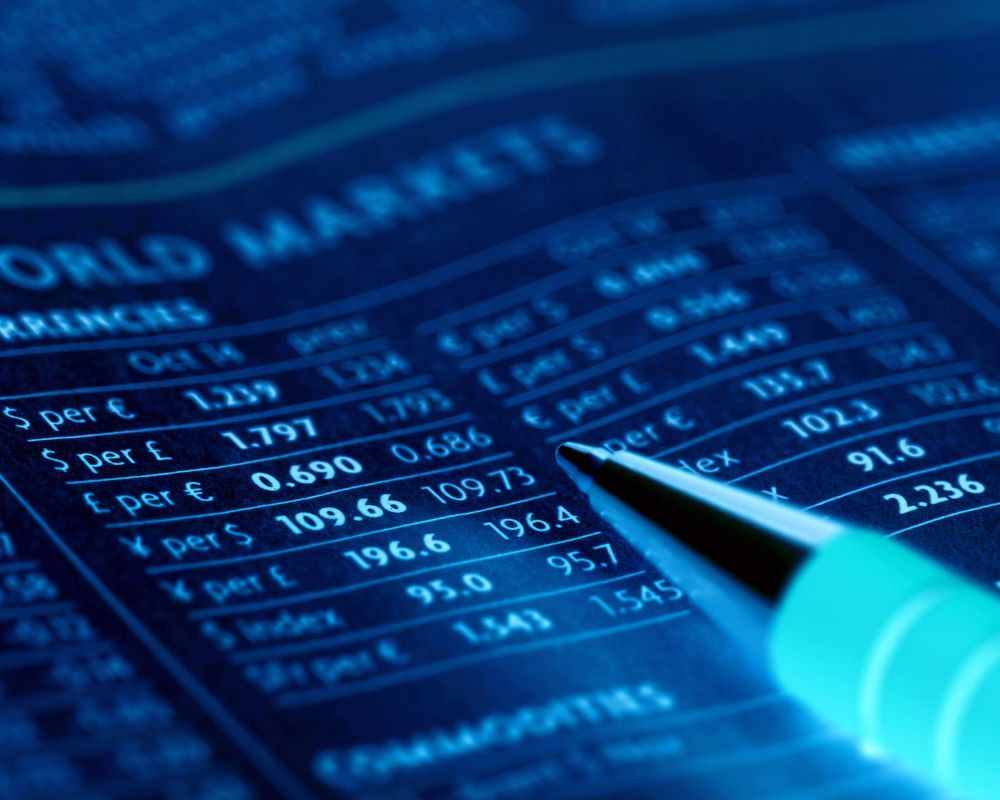
"Capital markets are perhaps the most widely followed markets. Both the stock and bond markets are closely followed and their daily movements are analyzed as proxies for the general economic condition of the world markets. As a result, the institutions operating in capital markets - stock exchanges, commercial banks and all types of corporations, including nonbank institutions such as insurance companies and mortgage banks - are carefully scrutinized.

The institutions operating in the capital markets access them to raise capital for long-term purposes, such as for a merger or acquisition, to expand a line of business or enter into a new business, or for other capital projects. Entities that are raising money for these long-term purposes come to one or more capital markets. In the bond market, companies may issue debt in the form of corporate bonds, while both local and federal governments may issue debt in the form of government bonds. Similarly, companies may decide to raise money by issuing equity on the stock market. Government entities are typically not publicly held and, therefore, do not usually issue equity. Companies and government entities that issue equity or debt are considered the sellers in these markets.

The buyers, or the investors, buy the stocks or bonds of the sellers and trade them. If the seller, or issuer, is placing the securities on the market for the first time, then the market is known as the primary market. Conversely, if the securities have already been issued and are now being traded among buyers, this is done on the secondary market. Sellers make money off the sale in the primary market, not in the secondary market, although they do have a stake in the outcome (pricing) of their securities in the secondary market.


The buyers of securities in the capital market tend to use funds that are targeted for longer-term investment. Capital markets are risky markets and are not usually used to invest short-term funds. Many investors access the capital markets to save for retirement or education, as long as the investors have long time horizons, which usually means they are young and are risk takers."


( http://www.investopedia.com/articles/investing/052313/financial-markets-capital-vs-money-markets.asp#ixzz3dQZE9ik1 )

What is The Capital Markets (simple)?


"Capital markets typically involve issuing instruments such as stocks and bonds for the medium-term and long-term. In this respect, capital markets are distinct from money markets, which refer to markets for financial instruments with maturities not exceeding one year.

Capital markets have numerous participants including individual investors, institutional investors such as pension funds and mutual funds, municipalities and governments, companies and organizations and banks and financial institutions. Suppliers of capital generally want the maximum possible return at the lowest possible risk, while users of capital want to raise capital at the lowest possible cost.

The size of a nation’s capital markets is directly proportional to the size of its economy. The United States, the world’s largest economy, has the biggest and deepest capital markets. Capital markets are increasingly interconnected in a globalized economy, which means that ripples in one corner can cause major waves elsewhere. The drawback of this interconnection is best illustrated by the global credit crisis of 2007-09, which was triggered by the collapse in U.S. mortgage-backed securities. The effects of this meltdown were globally transmitted by capital markets since banks and institutions in Europe and Asia held trillions of dollars of these securities."


( http://www.investopedia.com/terms/c/capitalmarkets.asp#ixzz3dQYofGAk )

Thursday, June 18, 2015

What Is The Money Market (expanded)?


Money Market: What Is It?
By Investopedia Staff

"The money market is a subsection of the fixed income market. We generally think of the term fixed income as being synonymous to bonds. In reality, a bond is just one type of fixed income security. The difference between the money market and the bond market is that the money market specializes in very short-term debt securities (debt that matures in less than one year). Money market investments are also called cash investments because of their short maturities.


Money market securities are essentially IOUs issued by governments, financial institutions and large corporations. These instruments are very liquid and considered extraordinarily safe. Because they are extremely conservative, money market securities offer significantly lower returns than most other securities.

One of the main differences between the money market and the stock market is that most money market securities trade in very high denominations. This limits access for the individual investor. Furthermore, the money market is a dealer market, which means that firms buy and sell securities in their own accounts, at their own risk. Compare this to the stock market where a broker receives commission to acts as an agent, while the investor takes the risk of holding the stock. Another characteristic of a dealer market is the lack of a central trading floor or exchange. Deals are transacted over the phone or through electronic systems.

The easiest way for us to gain access to the money market is with a money market mutual funds, or sometimes through a money market bank account. These accounts and funds pool together the assets of thousands of investors in order to buy the money market securities on their behalf. However, some money market instruments, like Treasury bills, may be purchased directly. Failing that, they can be acquired through other large financial institutions with direct access to these markets. "


Read more: http://www.investopedia.com/university/moneymarket/moneymarket1.asp#ixzz3dQSFUT2B

What Is The Money Market (simple)?


"A segment of the financial market in which financial instruments with high liquidity and very short maturities are traded. The money market is used by participants as a means for borrowing and lending in the short term, from several days to just under a year. Money market securities consist of negotiable certificates of deposit (CDs), bankers acceptances, U.S. Treasury bills, commercial paper, municipal notes, federal funds and repurchase agreements (repos)."
                             

( http://www.investopedia.com/terms/m/moneymarket.asp#ixzz3dQWONPrF )